Letters to the Writer: On Becoming Descendant
There’s a caricature of the Filipino literary scene over the last century: the dominance of academia, the culture of patronage politics, the epicenter for elitism, the binary of aesthetics versus politics . . . I ‘grew up’ in this contemporary literary culture.
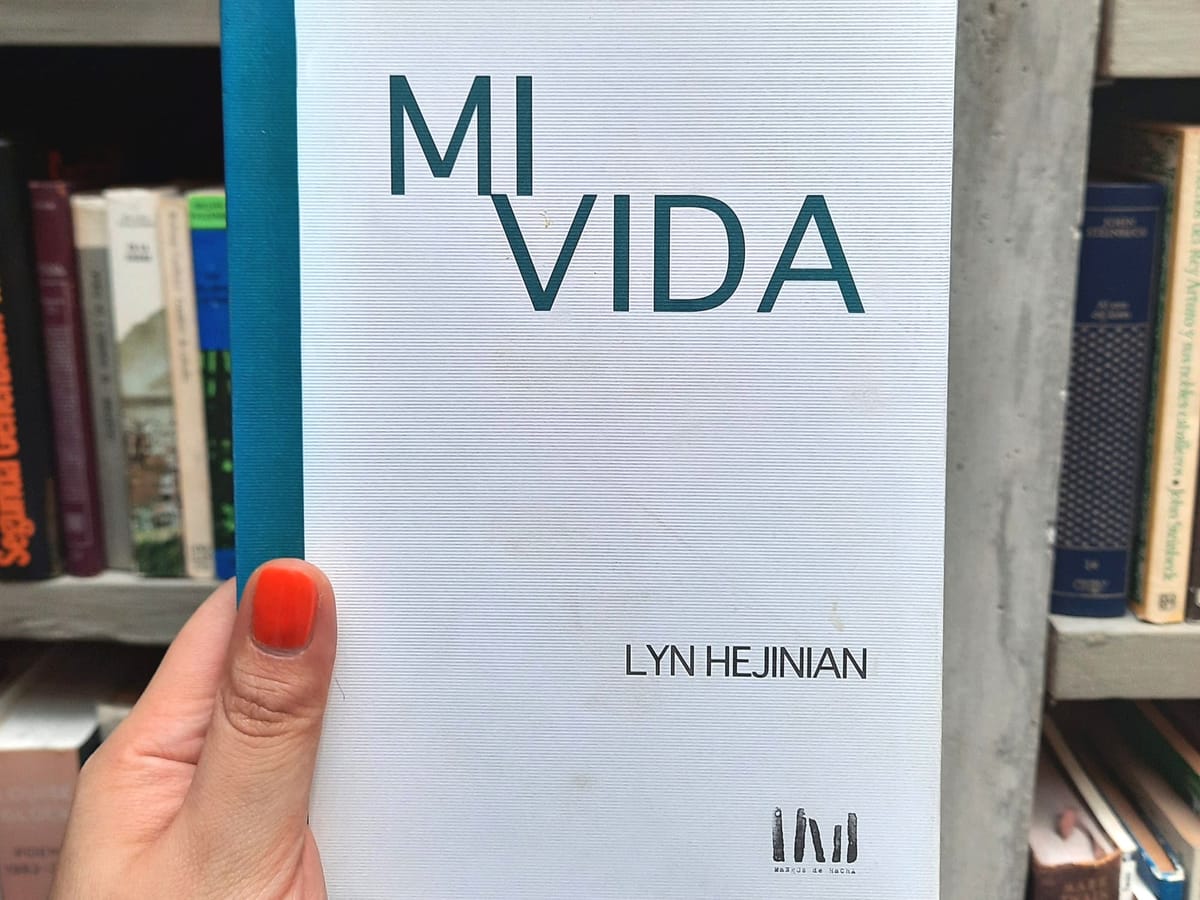
Language is the history that gave me shape
—Lyn Hejinian
the forms that keep culture humming … they are awake and growling.
—Lidia Yuknavitch
Dear Reader. Class is about to begin. I should tell you that the quote I mentioned earlier is from the novelist Lidia Yuknavitch—who took up the idea of writing her own memoir as a bet, then subsequently got a PhD in Literature out of spite following a bad comment at a writing workshop. “I close my eyes . . .” she continues in that chapter. “. . . there is a line of hers that keeps me well: Arrange whatever pieces come your way.” Dreaming in Women: the title of the chapter where that quote came from.
Dear Reader. The life of a Filipino writer writing in English never feels satisfying. How could it? With our postcolonial insecure jitters, we try to address our postcolonial milieu and neocolonial demise, how ever we attempt to disavow it. If you went through the formal education system, the basic unit of that separation, between you and you looking for your country, hid in plain sight: the word.
The English-speaking Pinoy writer is long entrenched inside that bifurcation, speaking a language of your elite, educated, made-to-be-professionalized class, and the cultural, political, and economic scripts that sustain it. We mourn it, we disavow it, and naturally, whether one becomes truly conscious of it or not, the ideological divide between ‘aesthetics’ and ‘politics’ made the grounds to one’s aesthetic orientation and writing life. Between social relevance and autonomy. Between literature and social reality. While having the agency to write and we do so, writing for many English-language writers makes ourselves peculiar to us, peculiarities that are traceable in the lines of our imperial histories and class separations. We’re relational reluctantly and can be hardly relational at all, if least through writing alone.
Writing in English, writing it well, would have lasting consequences on the native, postcolonial progeny of Filipino writers. And I think particularly for young English-language writers, who are neither satisfying to nationalists nor postcolonialists alike, we’ll forever have this latent problem of the terms of a pleasurable engagement. Writing is pleasure, yes, but to me it’s more a condition of contestation.
Throughout the history of Philippine literature, prominent English-language writers are known to make their own appropriations to their colonial tongues. Many of them during and after the Cold War period would constantly make and remake the English language in their own iconography, their own image.
The poet and scholar Conchitina Cruz attributes much of the failures of recuperating a critical stance of the postcolonial, contemporary Filipino writer to their “miseducation” through institutionalized creative writing, which she historicizes and argues as an apparatus of US cultural imperialism, made manifest through aesthetic conventions that were maintained by a literary establishment. [5] Those conventions espoused the tradition and values of New Criticism, which prized organic unity, clear voice (akin to a monolingualism), and transformative wisdom or insight. [6] Ample, though perhaps not enough, research has been done on how institutionalized creative writing programs and the recruitment of Filipino writers into the US constituted the concrete and effective apparatus of American colonialism after the official period of colonization and the Second World War. “The United States, an expanding empire after 1945, exerted hegemonic influence over every nation it courted, bankrolled, invaded, or assassinated the democratically elected leader of,” says Eric Bennett, the author of Workshops of Empire. “Creative writing played its part.” [7]
In Authoring Autonomy, Cruz considers Filipino writers such as José Garcia Villa, Jose Lacaba, and Carlos Bulosan, and their varying inclinations and comparative interpretations of their poetics and politics, as well as her own self-critique as an English-language Filipino poet working in the university. Villa, for instance, who expatriated to the US, she describes as the ‘leader’ in whom many local writers found a cultish fan and home base during the early postwar period, in the postcolonial cultural divide between art for art’s sake and literature as agent for social change. Writers were “divided”. [8] In/famous for his comma poems, Villa was the handsome protagonist to the former—he in fact studied at the University of New Mexico where he founded a now-long-gone literary magazine titled Clay, printed via mimeograph, before moving to New York City for postgraduate studies with fellow modernist poets at Columbia University. [9]
The novelist Gina Apostol also reflects on these ‘inherited’ New Critical realist and conservatist conventions: “It makes sense that America in the 1930s would fetishize an art form [emphasis mine] constructed around the narrow constraints of an individual’s refined perceptions. Not only does it branch from the colonial master’s private agonies,” she explicates, “it creates a whole school of Filipino writers from the thirties onward who are unaware that they are nursing the fetishes of their own oppressors.” [10]
Dear Reader. There’s a caricature of the Filipino literary scene over the last century that can be illustrated using some useful, terminological handles: the dominance of academia, the culture of patronage politics, the epicenter for elitism, the anti-establishment vigilance to complicity, the binary of aesthetics versus politics, the industry competition for international translation circa globalization, et cetera. I realize I ‘grew up’ in this contemporary literary culture, one that seemed to cement itself in the muck of writer-on-writer politicking over decades, doused in toxic machismo and padrino system ills, not to mention all the academic in- and inter-fighting, all whilst savoring the thrills of reading and writing among (mostly) kindred souls in the sometimes-forgotten spirituality of how literature could save a life.
When I began taking literature seriously in college, beginning with poetry, every good-quality poem had a checklist of moves [11] and common tropes which were expected to make it “meaningful.” Poetry had to have craft, to the point and to a fault, and in 2015, I wrote my entire undergrad exegesis against this very formula, saying:
It’s taken me almost ten years to revisit the stuff I wrote back in undergrad, and I’m glad that when I did, I could recognize I was still speaking truth to power. My second book, Compositions (written from 2011 to 2015 as my undergraduate creative writing thesis, and published much later in 2023) was unabashedly difficult, experimental, and in concert with contemporary literature in English that positioned itself explicitly against the poetics and politics of the dominant, Romantic New Critical mode. At the time, writing about music as my thematic inquiry, I argued and advocated for how radical, open-ended formal and literary modes could open up languages of inquiry. I enacted my own literary experimentations, thinking and feeling through form, and being close to failure in the need to write, to ‘translate’ and ‘transliterate’, to attempt.
“To find parallels is to sustain them without necessarily reconciling between them,to let them operate in a common space,” I still remember hearing as I moved through conversations about music between Palestinian-American critic and scholar Edward Said, and Israeli-Argentinian pianist and conductor Daniel Barenboim. “The role of a mind,” according to Said, “is to allow them to continue and play off each other, and you record that.” “One enacts the struggle between them,” I wrote back then, reflecting on such propensities, “and this opened up [my writerly disposition] to be troubled by that struggle, given its inherent difficulty.” [13]
It is through such relations that something new does emerge—presenting itself, coming into view, and becoming known. [14]
In hindsight, I came into the work of the literary under the mentorship of anti-establishment professors and peers, people whose collectives and ways of organizing themselves also wrested through that bifurcation: arranged, rearranged, fissured, and disintegrated over the years particularly after 2016. We were, devastatingly, “in the wakes”: the Me Too movement, university sexual harassment scandals, social justice booms and boons, the year that Rodrigo Duterte came into power, and even, the personal essay boom is over. Having left school and deliberately distancing myself from the never-ending disappointment and drama among literary circles after graduating, I think wherever we positioned ourselves, either ‘side’ had somewhat of its own reckoning. We all wanted to see how we could leave the literary for the relevant, the psychic for the social: the ironically fashionable moment of becoming passé. After all, what was all the writing really for?
Famously, the first national creative writing workshop in Asia, the Silliman Writers’ Workshop in Dumaguete, was patterned after the Iowa Writers’ Workshop, considered the most prestigious institutional creative writing program in the US, and founded by the Filipino writers Edilberto and Edith Tiempo (which they had both attended), ushering in the ‘Tiempo Age’ of aesthetic education. Going through old archival interviews with Iowa students, Cruz recounts how the Tiempos attended the Iowa Writers’ Workshop during 1946 to 1950, where they also attended with American Southern writer Flannery O’Connor, and the adherence to a refined, monolingual, and monocultural use of English was ostensive even among American writers. Cruz recounts, “Edith recalls that O’Connor had a thick southern accent, which proved to be a challenge to her peers . . . no one could understand what O’Connor was saying when she read her work. ‘They begged for Paul Engle [the founder of the Iowa Writers’ Workshop] to take away her manuscript and read it himself,’ said Edith. ‘From that time on,’ added Edilberto, ‘I stopped apologizing for my Philippine accent.’” [15]
Apostol—who also considers herself exposed to and at first educated under New Criticism, and was accepted to the Silliman Workshop as a fellow during her earlier writing years—further assesses these colonialist ideas of literature, given the resulting dialectic in local literary history between New Criticism and postmodernism. Apostol explains how the propensity in her own writing toward the so-called ‘postmodern’ voice and styles is about matching the literary and formal construction with her sense of history. “Philippine history is the overt result of various others shaping its sense of self. And [the postmodern voice], which refracts, realigns, and repositions texts and viewpoints from multiple angles . . . is a potent way to fathom and portray the unfinished ‘reality’ of such a nation.” [16]
It really isn’t accurate to call any of these out as binary. Though it felt like one came after the other in the latent desire of the making of a ‘Philippine literary new’. My refusal of the establishment aesthetics (a mimetic poetics of representational politics) was like putting on an item of clothing that never fit in the first place, then realizing there were whole worlds of surprises still possible in language, that language made possible, even if they were in English, and I could never deign to say that reading and writing then wasn’t necessary, almost spiritual. For a writer whose privilege is encoded in the very language I use to think and write, it still did feel like the literature I read noncompliant with the New Critical mode was like getting consolation prizes at a party—I mean, Language poetry was born-and-made in America during the sixties, and that seemed all the rage for privileged Anglophones like me back in 2010.
But then again. I might’ve just been one of those who sorta identified themselves in their early, stubborn years with the “young Filipino avant-garde.” [17]
When I thought I’d given up writing and thought to be leaving it for good, it felt, and still does, like it was always the right thing to do.
Dear Reader. Whose problem is it being a problem?
I guess the throughline of the conflict of the ilustrado in Philippine society has not really ended. Most academics are unsparing in their criticism of him—him, of course: the image we have of him is the well-traveled, highly educated, English-speaking mestizo who can recite bellas letras through the lettered city, [18] walk as a flâneur through the shopping arcades, [19] dress as a man in the overcoat. All while trying to recuperate his critical stance. He comes from well-to-do families, learned liberal ideas overseas. What we recognize to be the Filipino intelligentsia or the educated class goes far back as the late nineteenth century under the Spanish colonial period. (And elsewhere in New Spain, of which the Philippines were part, the term gente de razón carried a similar iconography and meaning.)
In Elites and Ilustrados in Philippine Society, the scholar Caroline Hau interrogates this popular imagination of the Filipino elite, pointing them out as more fluid social forces than that iconography may cause us to think. [20] Reconsidering the ‘middle sector’ of Philippine society, particularly in Manila and urbanized areas, Hau suggests that Filipino born and/or raised intellectuals are laced more intricately through Philippine society—themselves hard pressed to place themselves as they struggle to settle their roots, physically and psychically. Just as Hau critiques the convoluted imagination of Filipino elites who conflate their status with wealth, she also recasts the transnational if somehow relational character of the ilustrado (drawing both parallels and contradictions between them and Overseas Filipino Workers/OFWs, for instance).
In the long stream of ‘becoming conscious’, out from the political unconscious we inherited, identity is consumed as an endless problem which has also been mainstreamed and upheld by Western thought. The intricacies of a cosmopolitan existence, the impoverishment of psychic and social life, the transit from one class and context to another, underscore the deconstruction of concepts of social life and personal identity. It may work for us if we ought better to be ‘politicizing’ subjectivity than reifying identities, given how no one is born a class traitor. [21] It makes sense particularly for the ‘Global South’—which is really the postcolonial problematic of the Third World, ever persisting today, that neocolonialism and those polite idioms took from anti-colonialism, anti-imperialism,and class struggle to rearticulate its tensions. [22] For us in the Third World, social life is characterized less by fixed signifiers of identity (as a dominant, liberal identity politics would have it) but rather by relations of precarity [23] through the matrixed neuroses that pulsate in one’s psychic and social life. It’s our problem to have. It’s our problem and we ought to name it as such.
Filipino scholar Neferti Tadiar in Remaindered Life also poses this as both “an aesthetic problem and intellectual preoccupation” and “a political heuristic and aesthetic challenge” for Global South artists. It’s for those of us resisting “from the side of” “remaindered life” under the contemporary global order. Where life has been “remaindered” for the global majority, theartists, writers, and scholars who are “attuned to the paradoxes of living in the contemporary world” “must bear the burdens of its unresolved, inadmissible pasts.” [24]
It is perhaps as the poet and thinker Fred Moten describes “power”, he says: it is the “non-full subject.” [25]
Marxist thinking continues to hold for us the dream of a classless society, an undifferentiated labor, a superfluous demand in a world where “unrecognized modes of politics” go undernoted. What Moten together with Stefano Harney call the undercommons, the politics already in motion, “is therefore always an unsafe neighborhood.” [26]
The class composition to the question on whose problem it is being a problem, is the fluid middle: abstract as much as it’s been inherited, unresolved till we walk through it. Till we take the time to be specific about it. In almost every class, I tell my students and enjoin them: describe. Through a swarm of responses we write, rewrite, not write, and speculate. Through our feelings over “being a problem”, in the brutal combinations of access and deprivation, and our discernment inside the multifurcated matrix of inter-class relations within ourselves and with each other, I ask, what might this all (finally, perhaps) displace?
“. . . the thickness silence gains when pressed. . . Gap gardening . . . The ink washes into a deeper language, and in the end the water runs clear.” [27]
Carissa Pobre is a writer from the Philippines, and a Master of Fine Arts (MFA) in Interdisciplinary Art and Regenerative Culture from the University of New Mexico. becoming descendant was written and developed during graduate school, in resistance to the conventions of an academic paper, in fulfillment of the qualifications for MFA candidacy.
Works cited and consulted
[5] Conchitina Cruz, Authority Autonomy: The Politics of Art for Art’s Sake in Filipino Poetry in English, 1-12, 2016.
[6] Cruz explains, “Appropriated by Filipino writers in English during the postwar years, New Criticism, writes Bienvenido Lumbera, emerged as ‘the critical orthodoxy’ of local academia as well as ‘the absurd culmination’ of the art for art‘s sake movement in the Philippines. Developed by the Southern Agrarians, whose key spokespersons included John Crowe Ransom, Allen Tate, Robert Penn Warren, and Cleanth Brooks, New Criticism installed the literary text itself as the object of literary studies, an idea now regarded as a given in many literature classrooms . . . the provenance of New Criticism in American culture fortified the elite status of the Filipino writers who subscribed to it. [emphasis mine] Those steeped in New Criticism had access to what was considered a stand-in for global cultural capital, and therefore possessed not just ‘national’ but ‘international’ literary competence.”
[7] Eric Bennett, “How America Taught the World to Write Small”, Chronicle of Higher Education, 2022.
[8] Cruz, 34.
[9] “Filipino American History Month: Jose Garcia Villa”, Colorado State U English Department.
[10] Gina Apostol, “Narration and History,” A Novelist’s Blog, 2017.
[11] Mark Cayanan, Conchitina Cruz, and Adam David, Kritika Kultura Anthology of New Philippine Writing in English, 10, 2011.
[12] Carissa Pobre, “If (Not) Music: Self-machinations as Exergesis”, 2015.
[13] Ibid.
[14] Pobre, “Reading as a Relational Practice”, 2021.
[15] Cruz, 53.
[16] Apostol, 2017.
[17] J. Neil Garcia, “Reclaiming the Universal: Postcolonial Readings of Selected Anglophone Poems by Filipino Poets”, Humanities Diliman 11:2 (2014), 1-30.
[18] See Ángel Rama (translated by John Charles Chasteen), La Ciudad Letrada/The Lettered City.
[19] See Walter Benjamin, The Arcades Project.
[20] Caroline Hau, Elites and Ilustrados in Philippine Society, 2016.
[21] Chantal Jacquet, Transclasses: A Theory of Social Non-Reproduction, 10-22, 2023.
[22] Ramon Guillermo, “Post-Cold War Transformations of Global Literary Capitals in the Dissemination and Circulation of Southeast Asian Literatures”, Aguipo Global South Journal 2 (2023), 39.
[23] José Luis Barrios, Paradox and the Discourse of Inclusion?, 2024.
[24] Neferti Tadiar, Remaindered Life, xi-xii, 2023.
[25] Fred Moten, Manic Depression: A Poetics of Hesitant Sociology, 2017.
[26] Moten and Stefano Harney, The Undercommons: Fugitive Planning and Black Study, 28, 2013.
[27] Rosmarie Waldrop, “Lawn of Excluded Middle”, Curves to the Apple, 55.