The Turning of the Season
Summer is not always a tender season for me. Only this year of my life, I’m beginning to consider it is not so unkind. Summer, for me all since childhood and adolescence, was laced with thick tropical heat and unattainable beach bodies. Walk a girl out from indoors and move her under direct sunlight—if I asked the kid version of me, I would throw a tantrum immediately. This is, perhaps, why later in life a highschool bully spits in my eye; or why once in a pink moon I’d hear they knew you from school and said you were weird. I did not enjoy summer, despite any getaway—preferring to be with myself. By the time I was a teenager, every time I’d even think of having to be in a swimsuit, brandished fat and existentially unacceptable, I could hardly bear in my mind the picture of the scene. And the truth is, I can see myself in kids who haven’t learned to touch grass, teens who don’t want anything to do with things that aren’t their computers or their books; even as urban millennials may have finally restored this part of their nature, I see myself in the ways they prefer to be alone, not wanting to be bothered or made suspect. We might’ve been young, but we were deliberately detaching from society owing to our accruing awareness of what it was like to be in social environments: you become aware of others as spectators. Spectators of your choices. Spectators of the body. Summer, as a season, was a breaking point.
Crises happened during the summers: the summer of 2020 stands out. Enhanced community quarantine during the Covid-19 pandemic wasn’t enough; the government gave license to be extreme, hence the EECQ, and state authorities beat the poor and working class people on the streets while asking for food, demanding (how twisted) for their survival. Just like we’re still seeing now. That pandemic summer was a time when I could rely on nothing but my emotional honesty—not a body I inhabit so easily, as it turns out, it took crisis to teach me that. And crisis, congruent with dreams, mutated a chapter of my life when I could call myself a writer again. There are the summers of extreme heatwaves and water shortages—not that these don’t blur in my memory. I remember the worst water crisis on record in Metro Manila, from the summer of 2019 (“Long lines of residents carrying pails and basins. Empty water containers piled outside water stations. Firetrucks inside condominium complexes with half-filled pools and waterless faucets. This has become the new norm…”, the newspaper clipping says). Water tanker trucks drove through my barangay according to rationing. Heat now worries people as much as a sign of rain—knowing how bad it can get. This is all history, but it’s recent.
The summer of 2015 was when I graduated after five years in university, the exact date March 28. The only girl wearing pants beneath her toga garb (I realized after watching every girl who walked the stage and took their bow—my mother of course later pointed it out), I had barely done my eye makeup, much less carefully chosen an outfit that gave off proud public presentation, having achieved a milestone but taking the diploma in my same old clothes. I just wanted it to be over. The season again was harsh—for most of my life, I guess I was just never comfortable with myself. I was well past my mid-20s when I could feel like I could wear sleeveless tops, or tie my hair back so anyone could clearly see my face. And it’s always hot in Metro Manila. No one in my family remembers the way I do: I don’t remember it, but if that hurt you so much, then we are sorry. That day, that summer, every promising Ateneo graduate was sitting on their designated monobloc in the gymnasium, and one seat apart from someone who knew me, I ended up crying in my makeshift privacy, curtaining my emotional catharsis with my ugly hair. The ugly hair that protected me for years. Finally, it was over.
There are people who pray for the end of summer. People harvest during summer. People plant seeds in the turning of the season, and prepare themselves for the wet months. They conserve water. They finish up school. They schedule a pilgrimage. There are always people working. There are always people working. They buy swimsuits. They book tickets. There are people who wish the time we had for the summer was longer, and when we reach the most unbearable parts of the sweltering heat, we pray for rain. The parallels and paradoxes between the summer in the equator and the spring in the hemispheres—equidistant to all that, we may eventually see the difference like a kind of seasonal magic.
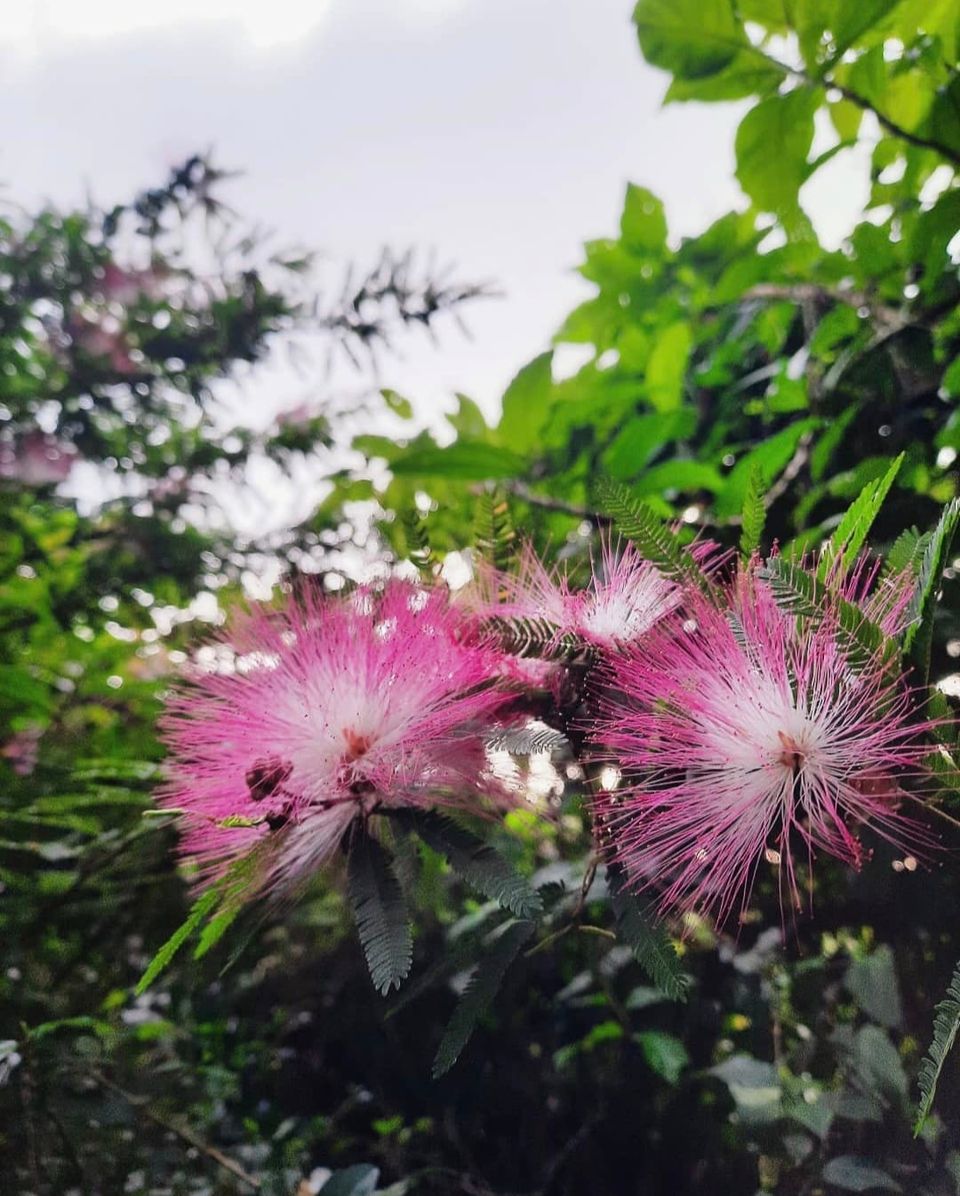
For the first time, it is summer during what is now my usual commute. I am walking through MRT Santolan station, feeling the prickly heat on my skin, the mid-afternoon sun that hurts my eyes. The amihan winds are gone, and I wonder what it’ll be like to go through the seasons on this commute, and for the nth time wonder whether I made the right decisions—organizing my daily life around this coming and going through Metro Manila, reorienting myself to the cosmopolitan in a way that’s the same on the surface but brand new—if I could find it in me and go through my days disarmed from a stance of having to defend. Or feel just a little less lonely. I don’t deserve to be interrogated. Was that what I said? I can’t believe this is even being brought up right now. The joy that’s right at the fingertips is often the hardest to get to; and the summer is harsh so often, in the eyes, on the skin. At the MRT station I am walking with a friend as we are making our respective ways home. Crossing the bridge over EDSA traffic from the Southbound to Northbound platform, I suddenly notice, there it is: the summer blooms I’ve been secretly hoping for.
A swath of pink flowering trees. In the middle between the national military headquarters and ultrarich private subdivisions. I am looking out into that patch of land, a part of my everyday experience of the city that provides brief reprieve—and I notice it’s hardly overgrowth, just ornamentals, two large trees with pink flowers planted along the highway. Two levels up this train station there’s something lush and green to look at.
I’ve seen the flowers before. Pink powder puffs that I once described as ‘spiky’ in my Google search. Calliandra brevipes. It took a few tries. I first encountered them a few years ago. When this summer began, I wondered when I’d see these flowers again, this time putting my sacred attention to what is blooming all around as I walk and move through the city—golden yellow narra, pink-to-white calachuchi, messy bougainvilleas on neighborhood curbsides. Even urban trees look brighter and different in the summer, I realize, rich green flora making scenes between billboards during a train ride, the trash thrown around on driveways, the road constructions and multilevel scaffoldings and mixed signages, the territories zoned by plastic and metal and rope and concrete barriers. All the trees are blossoming now. The powder puffs seemed special, but common enough to be urban flowers.
Research compels me to try and figure out what these pink powder puffs are. Consider their lineage, their history, their controversies, the information must all be out there. After all nature educators work hard, I’m sure Celine Murillo would tell me, I thought. But to my curiosity the pull of a rabbithole to research this isn’t there—for I am thinking these days with other questions, those whose shape and subjects compel me much more, they hurt a little, granted that I’m working hard to have time for all of them. The historicizing of postcolonial literature (beyond the dialectic of the socially relevant and the formally new), for instance; class politics around development; the cultural histories of the left; the true nature of the cosmopolitan; and so on. Research takes time and a village—I don’t expect I’d ever do it alone. Still, I wonder if I can feel about these pink powder puffs the way I feel about sunflowers in Baguio, let’s say, the way their botanical difference is both melded and stark in the Cordillera landscape; or is it sakura in Tokyo; or jacarandas in Mexico City. Who knows what the flowers really are. I won’t be able to bother myself entirely with the question, nor know all the answers. I had realized later in life I have to choose my questions—the questions that were borne to me by what I know and what I have lived, by what my life and something like God now seem to suggest.
I know I could have lingered longer. In that moment at the station, I felt elated. I took my phone out for photos and did wish I wasn’t heading somewhere to have stayed a few minutes more. But the urban architecture of Metro Manila does not lend itself to loitering, nor does police protocol—especially in a latest blow to everyday rights in the metropolitan, as the government put into effect a 10PM curfew lest they arrest loitering minors in the city. Conceivably derived from public debates over the affront of so-called geng-gengs in major urban centers, a class and classism issue no doubt, the policy effectively dehumanizes young people, and one could surmise that, in practice, gives state agents the license to target kids and teenagers among Metro Manila’s urban poor, despite perhaps even some reasonable intent. Sweep up the geng-geng, gulo-gulo off the streets—not to take them home, not to provide shelter or duty of care, but to arrest and add to a highly classed perception of safety. The ‘Safer Metro Manila Plan’ has boasted more than 60,000 violators in 6 days beginning April 6 (talk about doing the devil’s work), and while the police have since temporarily paused the operation due to anti-poor criticisms, and so too the harshness of the summer (people don’t wear shirts outside, so what, it’s always hot in Metro Manila), there seems nothing new to the state apparatus and the classist ideologies calcified within it. At MRT Santolan, Camp Crame and Camp Aguinaldo flank each side of that part of EDSA—right by the place where I usually work.
There’s an ache that runs through this writing like a sharp stab in the middle of our mouth. It is the combination of the consequences of fickle socializations and structural limitations that precluded me from living with the seasons, the flow of time. Some of it was my own personality while growing up (deigning at beach partying yuppies, conventional families and middle-and-upper class crowds at pool resorts—I guess because they reminded me of archetypes in my family). But if I knew the feeling of what it was like jumping in a river earlier, or just loitering through the city, I imagine the ease with myself would have been more common to me.
There’s an American writer Charles D’Ambrosio who describes the feel of the essay as this: “Writing an essay is a form of loitering—a lingering, a skulking, a meandering—and I like the sinister undertone—loitering with intent—but in the end,” he says, “it brings me back full circle to that boy at the bus stop, reading in the dim light, and to all my brothers and sisters, whether by blood or by bond, who find themselves, now and then, without apparent purpose.” D’Ambrosio was a mentor of the essayist Leslie Jamison, and I discovered the work through her who somehow someway mentored me, move forwards in time and she and I have one coffee in a Brooklyn spot in New York five years later, ever since our pandemic video call. By then I’d have meandered through places I don’t belong in, places I didn’t care so much for; lingered and loitered through places and friendships that surprised me I could belong and loved me back.
Having taught D’Ambrosio’s concept of the essay as loitering to students, particularly in the context of city life, I remind myself that I do not enter into form to become legitimate. Language takes the shape of one’s spiritual and political questions, the ones I realize that were mine all along. I consider myself lucky when it spills.
As with the feeling of accessing the seasons, it is in loitering that we restore the body. And what I wished that day during my graduation rites from undergrad was much like what I wished as a kid and as a teenager, a minor—the world calls it, during the summer family vacations out-of-town: Glad I came, but can’t wait to leave.
Member discussion